Hegemony Of Screensavers (Toubab with Sprint)
Hegemony Of Screensavers (Toubab with Sprint)
- 3D
- Generative art
- Nature
landscape
3d
04:00
2023

Stratigraphy R4
Dev Harlan

Hegemony Of Screensavers (Toubab with iPhone 5s) - Vertical
Dev Harlan

Stratigraphy R3
Dev Harlan

Aero Gardens III
Dev Harlan

Aero Gardens II
Dev Harlan

Hegemony Of Screensavers (Toubab with iPhone 5s)
Dev Harlan
Hegemony Of Screensavers (Toubab with Sprint)
Dev Harlan

Hegemony Of Screensavers (Toubab with Nikon)
Dev Harlan
Dev Harlan grew up in Silicon Valley and is self-taught, developing a keen interest in experimental video subcultures at an early age, before taking sporadic courses in computer science at Berkeley, drawing in Santa Cruz, and earth sciences at Columbia. He then began producing works in sculpture, 3D animation, and video projection mapping. His practice explores themes such as posthumanism, anthropogenic transformations, and technological consumption through a combination of object assembly, video projection, and programming. He employs technology in a reflective manner and challenges the dichotomy between human techno-culture and the natural world, drawing on ecocriticism and climate science. His works are conceived as a gateway to the subconscious and suggest the existence of fictional objects endowed with their own radiant power, allowing the viewer’s imagination to speculate on the object’s origins. He draws inspiration from artists such as James Turrell and other figures of the Light and Space movement, who achieved the sublime through a minimalist and radical use of light.
Dev Harlan has exhibited in the United States and internationally, with solo exhibitions at the Christopher Henry Gallery and the Madison Park Gallery in New York, as well as group exhibitions at the Sharjah Art Museum in the United Arab Emirates, “Ideas City” at the New Museum, the SVA Flatiron Gallery, and, more recently, at Art Dubai and the Wrong Biennial. He has completed several notable public art commissions, including an installation at the Los Angeles Central Library and a work for Canon USA. A 2020 finalist for the NYFA Digital Media Arts Fellowship, he also won the Mozaik Artist Grant in 2022 and served as an artist-in-residence at the Frank Lloyd Wright School of Architecture and the SVA Sculpture & New Media Residency. His work has been featured in numerous publications and articles, including Rhizome, Wired News, The Creators Project, and Right Click Save.

Hegemony Of Screensavers (Toubab with Sprint)
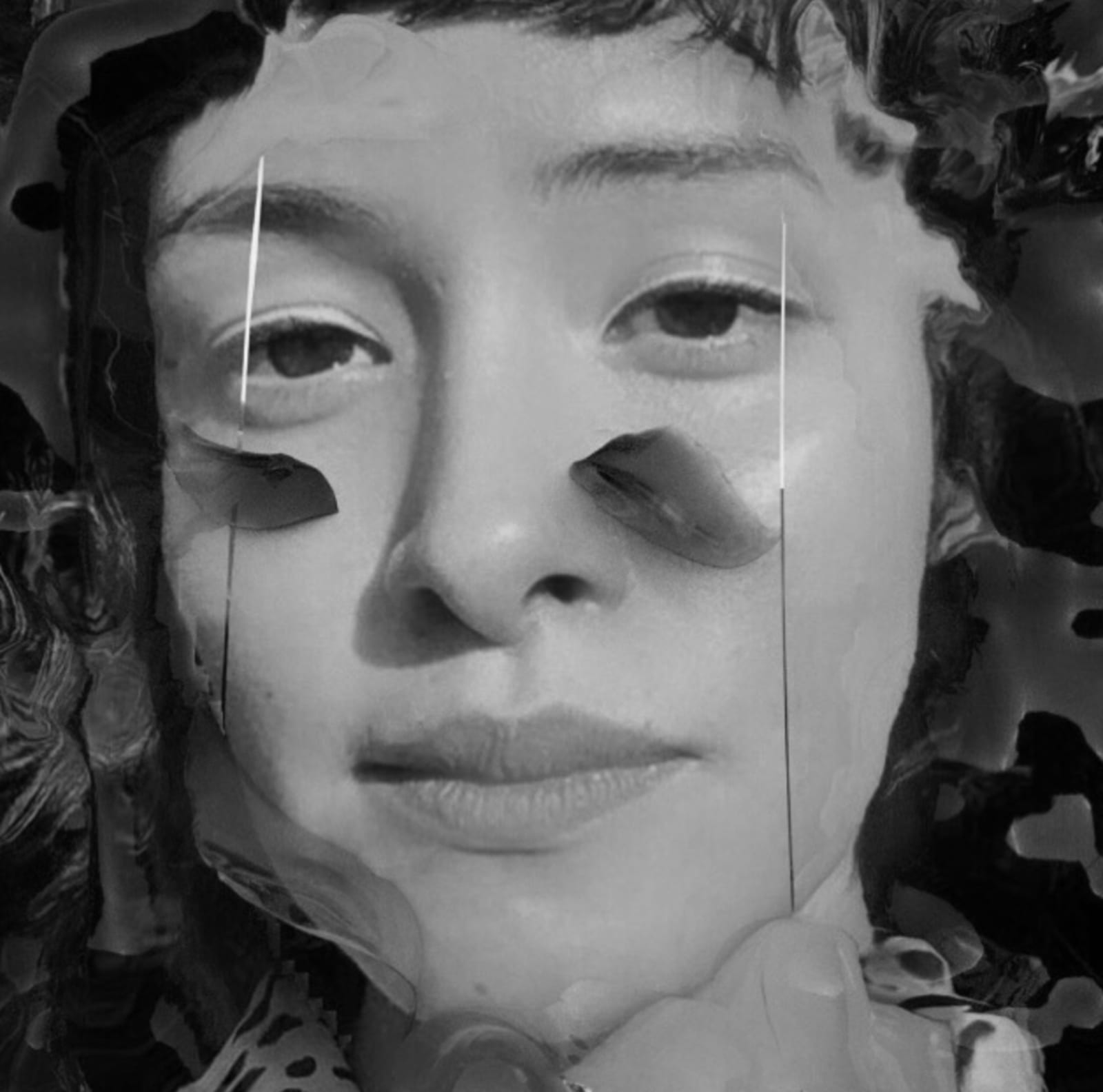
A randomized composition of digital artifacts. Scans of natural stone and found objects. Inefficient GLSL. Screensaver trails. Nonlinear dynamics with Lorenz and Wang-Sun attractors. Distilled hours, days and years.
Narrative Statement:
Suspended in a deep ambivalence. Thulien Pink and Rose Gold. The Earth is red in Senegal. I scanned volcanic outcrops along the coast, clambering about in non-deterministic orbits with a Nikon. A local man arrived and earnestly explained how the rock had a face and it held the spirits of their ancestors. His pained expression made it clear – I was violating the ancestral stone with my camera. I was that plundering colonialist. My first mobile phone was expensive for 1999, around $350. I didn’t need it, I just wanted it. I still have it. These and other artifacts pile up in small collections. Carmine Red, Grey and Platinum.
3d
landscape
04:00
2023
More from Dev Harlan
More on digital art
Collections with the artist