Once Upon A Garden: E (6 PM - 8 PM)
Once Upon A Garden: E (6 PM - 8 PM)
- Generative art
- AI
- Nature
- Meditative
landscape
generative art
00:50
2022

Electric Blossom X4 - Vertical
Linda Dounia

Fifth Generation_F3-GNS02, Once Upon a Garden: The Complete Archive
Linda Dounia

Once Upon A Flower 5
Linda Dounia

Fifth Generation_F1-GNS05, Once Upon a Garden: The Complete Archive
Linda Dounia

Once Upon A Garden: D (4 PM - 6 PM )
Linda Dounia

Fifth Generation_F6-GNS08, Once Upon a Garden: The Complete Archive
Linda Dounia

Fifth Generation_F1-GNS02, Once Upon a Garden: The Complete Archive
Linda Dounia

Electric Blossom X1
Linda Dounia
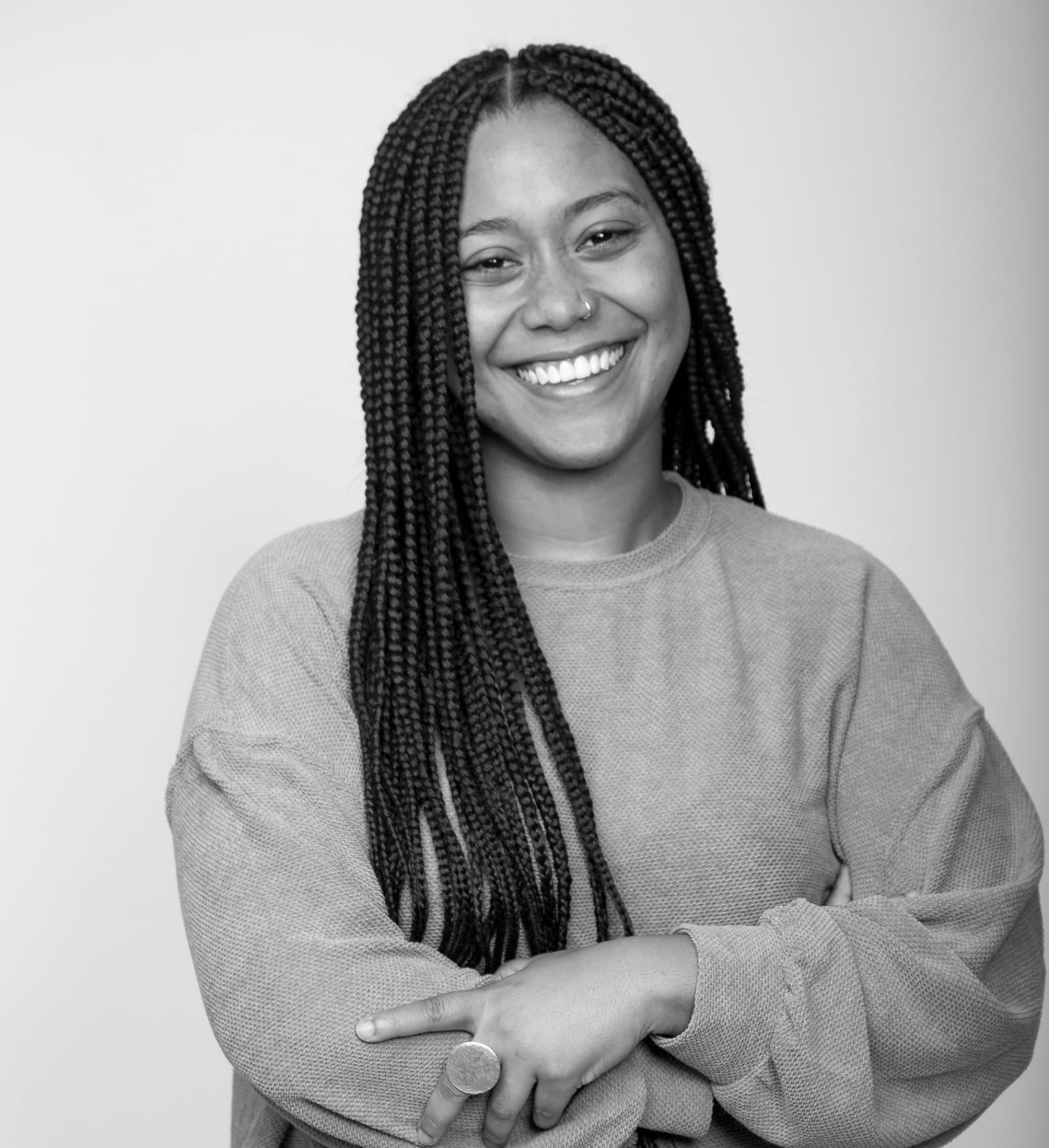
Linda Dounia is a Senegalese-Lebanese experimental artist, designer, writer, and curator. Her work examines the philosophical and environmental implications of techno-capitalism and how it reinforces systems of inequality. Her practice is part of a process of inner decolonization, which aims to untangle the fragmented and exclusive narratives associated with her identity by imagining alternative futures. Inspired by science fiction and speculative design, she explores modes of existence and creation on the margins of dominant narratives. Her works take shape in a liminal space between the immaterial and the material, combining analog and digital media (acrylic, ink, pastels, markers, scanners, vectors, video, GANs, generative AI, code, and unconventional materials). Her process is built on the tension between lived experience, code, and artificial intelligence, and advocates for greater agency in the face of algorithms, both in how we perceive them and how they perceive us. As a designer, she is interested in how technology can fairly represent and empower people. She has led design teams that use games, co-creation, and prototyping with communities to better understand systemic inequalities and make technology more accessible.
Her work on speculative archiving, the creation of AI models that help us remember what has been lost, earned her a spot among the most influential figures in artificial intelligence on the TIMEA100 list in 2023. In 2024, she also received Mozilla’s RISE25 Award for her work in the field of AI. Her works have been exhibited at Christie’s, Larsen Warner Gallery, Unit London, Art X Lagos, Partcours, Art Basel (Basel, Miami), the Dakar Biennale, Artsy NFT, Digital Art Fair Asia, and Art Dubai. More recently, she has been featured at prestigious events such as the 2025 Summit for Action on AI in Paris, the exhibition Le Monde Selon l’IA at the Jeu de Paume, and the Augmented Intelligence auction at Christie’s.
Once Upon A Garden: E (6 PM - 8 PM)
'Once Upon A Garden' is a digital garden born from a collaboration between me and a GAN which debuted at Art X Lagos in November 2022. It is a dystopian projection of a likely outcome of global warming, that depicts a world where humans now have to live with simulated images of plants and flowers, which have all disappeared from the earth. Through collections of AI-assisted photographs of a variety of indigenous flora, native to the Sahel region of West Africa, the installation puts forward the fundamental question: Can our contemplation of art restore our collective ability to introspect on our environment and our sense of responsibility towards preserving it? The installation attempts to answer this through the spectacle of flora as a distant memory, to elicit a longing for what has been lost and hopefully trigger the desire to protect what has survived. I first compiled a list of over 100+ species of flora endemic to the Sahel region and classified as endangered by IUCN's Red List of Endangered Species. I then scoured the web for images of these plants to create the database I would later use in the first round of training. I had come across some of these plants before, but many were new to me. It dawned on me that I might not get to see a majority of these plants in nature within my lifetime given the rate at which wildlife is disappearing from the earth. From this database, I then shortlisted plants that I imagine would fit well together in a garden and used the AI tool DALL.E to generate a large set of variations of each plant. This allowed me to compile a second, more refined, database specifically for this installation which I used to train a GAN. I used the GAN's initial outputs of 8,000 plant images to create animations of individual plants that I then brought together in the final composition.
generative art
landscape
00:50
2022
More from Linda Dounia
More on digital art
Collections with the artist