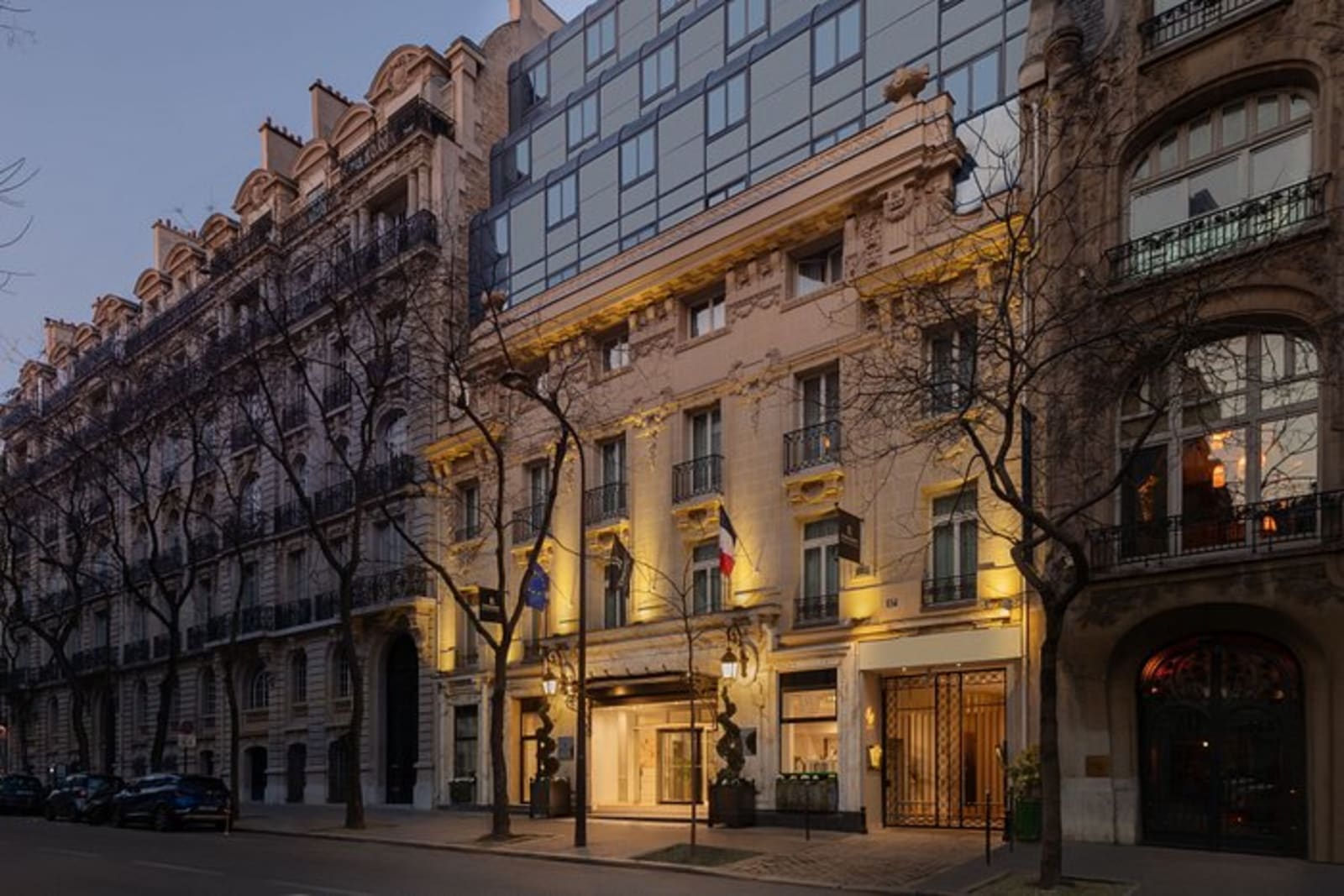
In partnership with Artpoint, the Renaissance Paris Nobel Tour Eiffel hotel offers you the experience of digital art. Each month, discover the video artworks of four of the most cutting-edge digital artists of the moment on the sumptuous wall of screens located in the lobby. Find here the details of the current exhibition!
The Romantic Machines series is part of an ongoing body of work Andrés Reisinger has been developing over the past five years, exploring how the emotional sensitivity and atmospheric qualities of Impressionism can be translated into the digital realm.
The works begin through a hybrid process combining photography, scans of flowers, painterly gestures, and fragments of brushstrokes, which are then reconstructed within volumetric 3D environments. Through the use of virtual camera lenses, depth of field, motion blur, and temporal processing techniques that generate multiple layers of interpolated frames beyond real-time capture, the pieces drift into a space between memory, painting, and simulation.
All of the works belong to a dreamlike universe inspired by plants, flowers, and organic forms. Nature becomes both subject and emotional language, allowing the artist to soften the coldness of machines and bring a sense of romance, fragility, and human intimacy into digital space.
Rather than attempting to imitate traditional painting, the works seek to expand its emotional logic through contemporary tools and technologies.
The Romantic Machines series is part of an ongoing body of work Andrés Reisinger has been developing over the past five years, exploring how the emotional sensitivity and atmospheric qualities of Impressionism can be translated into the digital realm.
The works begin through a hybrid process combining photography, scans of flowers, painterly gestures, and fragments of brushstrokes, which are then reconstructed within volumetric 3D environments. Through the use of virtual camera lenses, depth of field, motion blur, and temporal processing techniques that generate multiple layers of interpolated frames beyond real-time capture, the pieces drift into a space between memory, painting, and simulation.
All of the works belong to a dreamlike universe inspired by plants, flowers, and organic forms. Nature becomes both subject and emotional language, allowing the artist to soften the coldness of machines and bring a sense of romance, fragility, and human intimacy into digital space.
Rather than attempting to imitate traditional painting, the works seek to expand its emotional logic through contemporary tools and technologies.
The Romantic Machines series is part of an ongoing body of work Andrés Reisinger has been developing over the past five years, exploring how the emotional sensitivity and atmospheric qualities of Impressionism can be translated into the digital realm.
The works begin through a hybrid process combining photography, scans of flowers, painterly gestures, and fragments of brushstrokes, which are then reconstructed within volumetric 3D environments. Through the use of virtual camera lenses, depth of field, motion blur, and temporal processing techniques that generate multiple layers of interpolated frames beyond real-time capture, the pieces drift into a space between memory, painting, and simulation.
All of the works belong to a dreamlike universe inspired by plants, flowers, and organic forms. Nature becomes both subject and emotional language, allowing the artist to soften the coldness of machines and bring a sense of romance, fragility, and human intimacy into digital space.
Rather than attempting to imitate traditional painting, the works seek to expand its emotional logic through contemporary tools and technologies.
The Romantic Machines series is part of an ongoing body of work Andrés Reisinger has been developing over the past five years, exploring how the emotional sensitivity and atmospheric qualities of Impressionism can be translated into the digital realm.
The works begin through a hybrid process combining photography, scans of flowers, painterly gestures, and fragments of brushstrokes, which are then reconstructed within volumetric 3D environments. Through the use of virtual camera lenses, depth of field, motion blur, and temporal processing techniques that generate multiple layers of interpolated frames beyond real-time capture, the pieces drift into a space between memory, painting, and simulation.
All of the works belong to a dreamlike universe inspired by plants, flowers, and organic forms. Nature becomes both subject and emotional language, allowing the artist to soften the coldness of machines and bring a sense of romance, fragility, and human intimacy into digital space.
Rather than attempting to imitate traditional painting, the works seek to expand its emotional logic through contemporary tools and technologies.
The Romantic Machines series is part of an ongoing body of work Andrés Reisinger has been developing over the past five years, exploring how the emotional sensitivity and atmospheric qualities of Impressionism can be translated into the digital realm.
The works begin through a hybrid process combining photography, scans of flowers, painterly gestures, and fragments of brushstrokes, which are then reconstructed within volumetric 3D environments. Through the use of virtual camera lenses, depth of field, motion blur, and temporal processing techniques that generate multiple layers of interpolated frames beyond real-time capture, the pieces drift into a space between memory, painting, and simulation.
All of the works belong to a dreamlike universe inspired by plants, flowers, and organic forms. Nature becomes both subject and emotional language, allowing the artist to soften the coldness of machines and bring a sense of romance, fragility, and human intimacy into digital space.
Rather than attempting to imitate traditional painting, the works seek to expand its emotional logic through contemporary tools and technologies.
The Romantic Machines series is part of an ongoing body of work Andrés Reisinger has been developing over the past five years, exploring how the emotional sensitivity and atmospheric qualities of Impressionism can be translated into the digital realm.
The works begin through a hybrid process combining photography, scans of flowers, painterly gestures, and fragments of brushstrokes, which are then reconstructed within volumetric 3D environments. Through the use of virtual camera lenses, depth of field, motion blur, and temporal processing techniques that generate multiple layers of interpolated frames beyond real-time capture, the pieces drift into a space between memory, painting, and simulation.
All of the works belong to a dreamlike universe inspired by plants, flowers, and organic forms. Nature becomes both subject and emotional language, allowing the artist to soften the coldness of machines and bring a sense of romance, fragility, and human intimacy into digital space.
Rather than attempting to imitate traditional painting, the works seek to expand its emotional logic through contemporary tools and technologies.