Hydra Viridissima - Horizontal
Chloé Savard

Orange Sanguine - Horizontal
Chloé Savard

Pinnularia - Horizontal
Chloé Savard

Bulles
Chloé Savard

Algues Bleues
Chloé Savard

Gummy world
Chloé Savard

Diatomée - Horizontal
Chloé Savard

Orange Sanguine
Chloé Savard
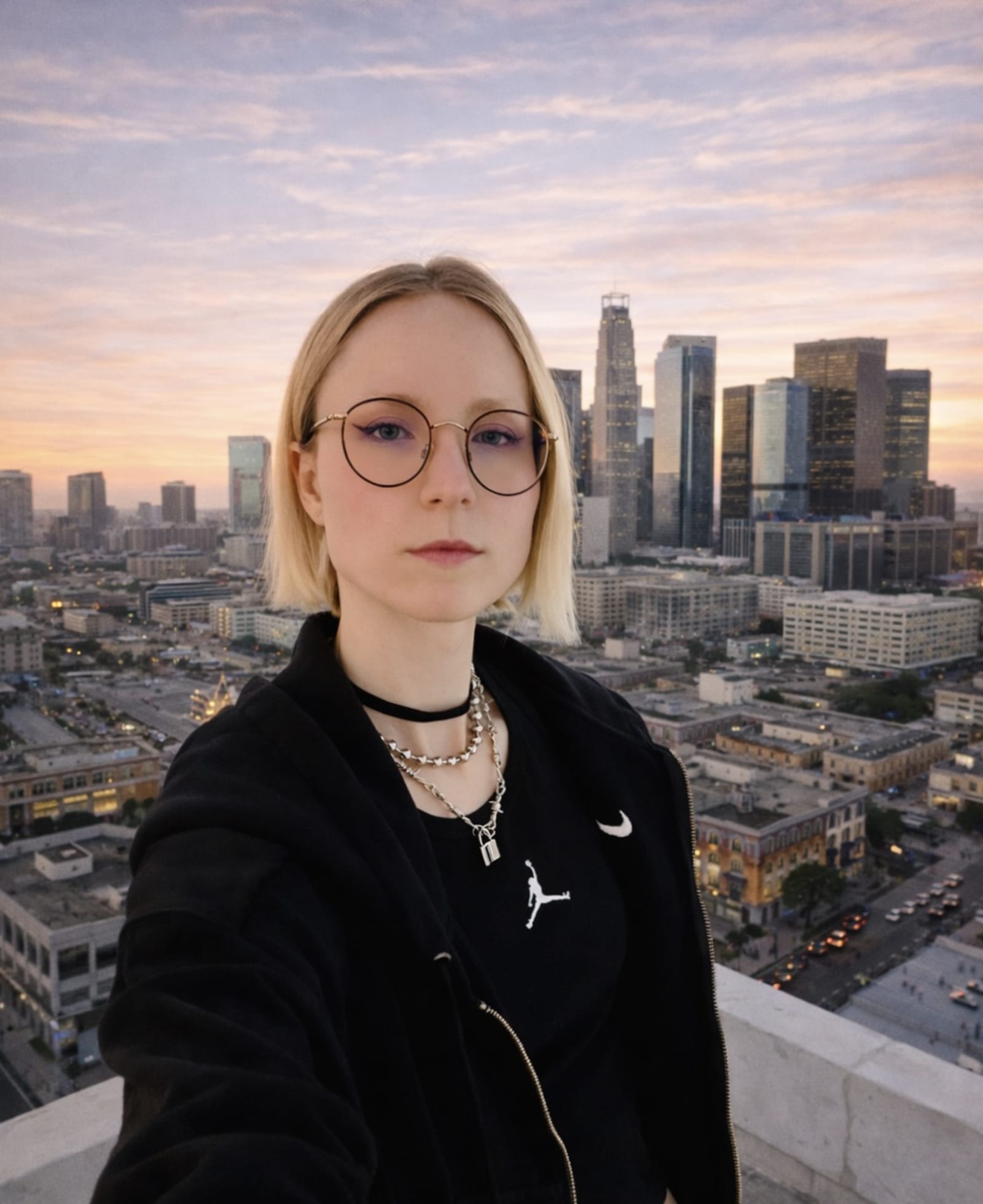
Chloé Savard is a Montreal-based artist and microbiologist. Originally trained as a musician, she turned to microbiology as a way to explore new scientific and creative perspectives. Under the pseudonym @tardibabe on Instagram, TikTok, and YouTube, she uses a microscope and her iPhone to capture striking images and videos of microorganisms—transforming drops of water into mesmerizing visual landscapes. Her work blends art and science, revealing the hidden beauty and complexity of microscopic ecosystems while raising awareness about their fragility.
Her unique approach has earned her two honorable mentions in the 2022 Nikon Small World In Motion competition. She has also showcased her work at events like the SPHÈRE Festival at Canada’s National Arts Centre. Through collaborations with scientific and cultural institutions, Chloé shares her discoveries with a wide audience, helping to democratize microbiology and inspire a new generation of observers of the invisible world.

Cytoplasme

Nassulids have been found in soils, freshwater and marine habitats in Europe, Africa, Asia, North America and Antarctica. Nassula is a voracious eater of Cyanobacteria, also called blue green algae, like Anabaena or Oscillatoria!
The bright and beautiful colours characteristic of Nassula comes from the digestion of Cyanobacteria after being ingested by their basket shaped, which is a microtubular complex that looks like a little fork! When cyanobacteria are ingested, many small food vacuoles containing hydrolase enzymes are synthesized to breakdown and digest the food. The colour of those small bubbles (food vacuoles) depends of the pigments present in ingested cyanobacteria; blue-violet globules comes from eating species that have phycocyanins (Anabaena and some Oscillatoria), pink bubbles come from grazing on species that contains phycoerythrins, etc.
video
portrait
02:01
2022
More from Chloé Savard
More on digital art
Collections with the artist